Showing posts with label Conflict Resolution. Show all posts

Confict Resolution Review: Rotations

Friday, December 9, 2016
Last year I devoted an entire lesson in 3rd grade to reviewing the skills taught in previous lessons and I think it was well worth the time. This year I decided to do the same.

Last year I used both a Mario and a Jeopardy game (pre-created PPT templates with my Qs added in). They were a big hit, but it did require whole group attention for 45 minutes straight (that's a challenge for many adults I know!) and I'm not sure how much it helped to cement ideas in their minds.


Because so many of my lessons with 3rd grade this semester have involved sorting and/or task cards, I decided rotations would be the way to go. I tested something similar out last year and while it wasn't perfect, I decided I wanted to give rotations another shot.

I spent the first 10 minutes explaining each of the rotations and very briefly reviewing some of the concepts. My 3rd grade classrooms are all set up in 5 table groups, and so logistically it was a breeze in terms of spacing and grouping; each table group area was a rotation and students traveled together in their table groups. Students then rotated through 5 stations/centers with about 6 minutes at each and 30-60 seconds for transitioning. In hindsight, I should have maybe just done 4 rotations so they could spend longer at each.

Rotation A: The Conflict Escalator
Super straightforward - this was just sorting the same cards we used in this lesson into two categories: words/actions that escalate conflict and words/actions that de-escalate conflict. This wasn't challenging at all for them, but the bimonthly survey I give my teachers indicated that understanding these choices during conflict was still an issue so I included it.


Rotation B: Sizes of Problems
I made an anchor chart about the weather themed sizes of problems we learned about and gave them the same problem cards we used in this lesson to sort through.


Rotation C: Types of Conflict
Another tiny anchor chart and some conflict scenario cards to match up. Most of the scenarios are from the PPT I used to teach this here but I added/swapped a couple as well.


Rotation D: What would you do? Kelso's Choices Edition
A few years ago, my co-counselor got a counselor resources catalog that had this mini (colored!) Kelso's Choices poster. It's perfect for this sort of thing. This center used that poster, the sentence stems "If this conflict happened to me, I would choose _______ because _______", and some conflict examples from this set of cards (I pulled out about 10 of them that seemed to be major issues in the grade this semester). Students took turns pulling and reading cards, then identifying how they would solve the problem and why.


Rotation E: Talk it Out
I pulled another 10 of the most applicable conflict example cards and put them with the Talk it Out sentence stems in sheet protectors and skinny dry erase markers. Whereas the other centers are group based, this one is individual work. Students practiced writing Talk it Out statements given conflict examples, similar to in this lesson.


And that's it! Teachers take time to review core concepts they've already taught and practiced, why shouldn't we?! Next semester, the 3rd grade theme shifts into problem solving other types of problems (being responsible, coping skills, etc.) and this was a simple and fun way to wrap up conflict resolution.

Talk it Out

Saturday, October 29, 2016
A few years ago, our 3rd and 4th graders were just plain old mean to each other. Half the time, it was coming from them feeling wronged by the other person and believing that meanness was the appropriate response back. The standard Kelso's Choices lesson wasn't cutting. Cue: TALK IT OUT

I went into each room and explained, taught, modeled, and practiced using specific sentence stems to talk it out with someone when you're upset with them. MAGIC happened. Well, sort of. In every room where the teachers made any effort (big or small) to reinforce this, conflict went significantly down in every room. It's now become a mainstay in our program. This is a rundown on how we teach it.


With K and 1st, we read The Peace Rose. It can be hard to get your hands on, and it's ridiculously simple and short, but it's the perfect model and mentor text. We read the story, then ask the students to recall the words the characters used to solve their problems and write them on an easel. We whip out a fake rose (a "gift" from our friend Kelso) and then have students come up in twos and practice using Talk it Out with the rose given scenarios we provide them. I usually avoid lessons that involve everyone coming up and practicing something because this usually requires the class to have crazy strong attention spans, but it always seems to work here.


With 2nd grade, we review the sentence stems involved (usually by projecting them) and model a couple examples. If the class has done "quiz, quiz, trade" before, then we provide them with pre-written statements and practice this way. If not, or if they're just not ready for this sort of activity,
we have the students sit in a circle and read cards in whisper voices to themselves and then pass. After a couple rounds, have 1-2 students read theirs aloud before we continue on. We also included some apologies in our cards.


With 3rd grade, I hit Talk it Out pretty hot and heavy. After a lesson specific to the action options in Kelso's Choices (ignore, walk away, wait and cool off, go to another game, share and take turns), we talk about our "peace words". Students share their ideas and we add them to the board in a bubble map of sorts. Then I re-introduce the sentence stems, adding in the "because" element (more for their own self-awareness!). I model it twice and ask them to tell me what they noticed about my body language and tone of voice. Then we briefly discuss why we tell the person how we feel and what caused it. Our first practice activity with this is using pre-written Talk it Out statements in a modified "quiz, quiz, trade" (more like "read, read, trade"!). You can find these statements here. Without prompting, they usually respond appropriately to one another's statements which is a great bonus. When I've done this with older/more mature groups, we process after what it felt like to both deliver and receive these messages - but my fall semester 3rd graders aren't usually read for this. 

Then it's time for a challenge - I have the students write their own statements. Each kiddo gets the sentence stems in a sheet protector and a skinny dry erase marker. I project several of the conflicts from my key ring of conflict situation cards (as many as time allows). After each scenario, I have one or two students read their statement aloud.


Depending on the group, I sometimes repeat the 3rd grade lesson to the 4th graders. This year I was able to just review it and then model/teach using reflective listening. Instead of a QQT, we sat in a circle and I gave half of the students the pre-written statements. Everyone turned to a partner next to them, the person with the card read it, and gave it to their partner. Then everyone turned in the opposite direction and repeated. This allowed students to practice both reading and listening/responding. Then I introduced the idea of reflective listening. Without using that phrase, I just explained it was one way of responding to someone when they talk it out with you. We discussed how using it helps us be better listeners and helps the other person know we were paying attention. 

To practice, I have half of the students the remaining talk it out statement cards and the other half of the students received reflective listening sentence stem cards. Then it was time to "read, read, trade!".
 

Conflict Escalator Lesson

Tuesday, September 27, 2016
While reading through the comments on this blog post, I discovered the book Teaching Conflict Resolution Through Children's Literature and the idea of the "conflict escalator". Especially when conflict was a bigger problem at our school, it seemed like our students were constant escalating their problems unknowingly! This seemed like a great lesson topic for 3rd grade's conflict resolution unit.


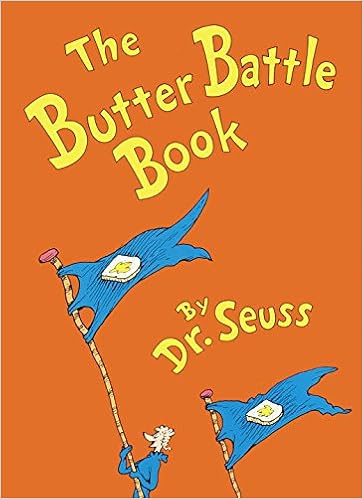
This was a lesson I wanted to start with a book but had a difficult time finding the perfect one. I needed something that showed not just the cycle and effect of conflict, but the escalation of conflict. While I would still love to find one that has more real world examples, The Butter Battle Book ended up working as a great start. After reading the book, I asked them:
  • At the beginning of the story, what was the problem or conflict about?
  • At the end of the story, what was the problem or conflict about?
  • Did the size of the conflict or problem stay the same or change during the story? Did it get bigger or smaller?
  • The conflict kept going and growing. Did it have to? Or could the Zooks or Yooks have done something to make the conflict smaller or stop?


Then the students move to their desks and I introduce the concept of the conflict escalator using a PowerPoint. Not all of my students have been to big malls and most have not been to airports, so it was important I be able to give them a visual! We walked through the vocabulary of escalating vs. de-escalating. I added in the weather visuals to tie in with our size of problems lesson and learning.


The next step was to go through two story examples. The stories are adaptations of stories I found over and over again when googling the teaching of this topic - just changed the specifics to be a fit to my school.


First I read aloud while students acted it out. Then I read it aloud again and students motioned whenever a character said or did something that escalated the conflict and made it worse. I flashed these up the steps on the PPT as we went. After finishing the story, I asked them to come point out one or two star locations and give an example of how the character could have made a different choice to de-escalate the conflict.


Our final activity was for students to work in pairs or trios to sort words and actions that would escalate vs. de-escalate conflict, and then to personally identify 1 or 2 escalation cards that they were "guilty" of doing during conflict. Cards are available here in my TpT store.


Closing questions (if time):
  • Which is easier to do, escalate or de-escalate conflict?
  • Why do people sometimes choose to escalate conflict?
  • Why should we choose to de-escalate conflict instead of escalate it?
Our next lesson starts a 3-part "unit within a theme" on conflict de-escalation strategies.
                                                                                                                                                                                                                    

Upstander Lesson

Sunday, September 11, 2016
Continuing 3rd grade's conflict resolution unit, we did a lesson on being an upstander. I tried to underscore, as much as possible, that being an upstander is not limited to bullying conflicts, that we should be upstanders whenever we see mean moments as well. This is the perfect followup to our Types of Conflict lesson, where many of my kiddos asked me "but what do we do if" questions.

We started off by reviewing the types of conflict using a short PPT (see below). We gather on the rug and I ask them to:
  • Push your nose like a button if someone has ever said something mean to you.
  • Pull your ears if you've ever said something mean to someone else.
  • Touch your elbows together if you've ever watched someone be mean to someone else and it made you feel uncomfortable.
  • Pat your head if you've heard the words "bystander" and "upstander" before.
  • Rub your stomach if you know the definition of the words "bystander" and "upstander"

Then we read the book Dare! by Erin Frankel. My favorite book for teaching the concept of skill of being an upstander is The Juice Box Bully but that's being included in the classroom mini-SEL libraries I'm creating (more on that later) and this book is pretty great as well. I didn't personally love it when I first read it, but I've found my students really take to it. I usually offer to let the teachers borrow my companion Weird! and Tough! books if the kiddos are super into it.


While reading, I ask them:


  • Cover: Look at the picture on the cover. What do you think this story is going to be about?
  • Pg. 5: Have you ever felt this before? Glad that you weren’t the one being picked on, but sad it was happening to someone else?
  • Pg. 11: What does she mean by “this isn’t the kind of person I want to be”?
  • Pg. 13: Why does she feel even more scared and alone after she’s mean to Luisa?
 Back at their desks, I open the PPT back up and we go through a handful of the slides from Eve Coates' Preventing Bullying Interactive PPT. I just use the ones that show the different roles in mean conflict, but I make some edits so that it fits the vocabulary I use in my counseling program. I put in a bystander vs. upstander review slide in at the end to really hit the idea home.
*Eve Coates shows a complete animated preview of her PPT on TPT, I just want to show you my examples and edits.
 
I want my students to know about the roles in bullying, but what I want even more is for them to learn and use the skills needed to have a positive school culture. I try to make my lessons skill building and not just "planting seeds of knowledge" when possible so that we can see real behavioral change with the students.

In order to kick off the application portion of the lesson, I "pick on" a peer and say "What if I called Jasmine a mean name? What kind of things would an upstander say to me?" and get some ideas. Then I ask "What kinds of things would an upstander say to Jasmine?" and get some more ideas.

Then I introduce the activity of "Quiz, Quiz, Trade" to them - only a handful did this with their 2nd grade counselor or 2nd grade teachers. In this version, it's less of a "quiz" and more of a "task". I have cards with different things an upstander would say (to the person being mean and to the person whose feelings are being hurt). I teach and model how to do the activity (every person has a card, partner up, take turns reading cards, trade cards, find new partners, repeat) and then we discuss the tone of voice we should use. It's hard to be calm and respectful when you're angry someone has been mean to someone else!


Depending on time, this is a 5-10 minute activity. When time is up, I get their attention and we return to our desks and they do an exit ticket for me. It's a lot of paper (and trees), but I found this really worthwhile in 1) getting them to think through the skill and imagine a time to use it and 2) for me to get a sense of each class' understanding and ability with this.


Like with our last lesson, I sent home a parent letter for this as well (in all 3 languages of course - though I should probably ask our translators how they were able to translate the word "upstander" since it's a bit of a new concept/construct/word!)


In a world with endless time, I would have also included a round of beanbag freeze. This could be such a fun way to start a discussion about helping one another and how doing so makes things better for everyone.
 
Powered by Blogger.
Back to Top