Showing posts with label Bibliotherapy. Show all posts

Mini SEL Classroom Libraries

Thursday, January 26, 2017

Last spring, I applied for and was awarded a grant within the district whose parameters were basically that it have to do with bullying and/or SEL. Being a bibliophile, I jumped at the chance to get more books in the classrooms. I wrote the grant for getting a mini-SEL library for each classroom with books specific to the issues I see each grade level face most commonly/pervasively.

After we got the books (and oooed and ahhed over them extensively), we ordered some of our favorite book boxes for them, and consulted with our literacy coach. Our hope was that by including some standards-based discussion questions and writing prompts, we could garner additional investment from our teachers for the books usage. Then started the task of compiling (and sometimes creating) short extension activities for each book.


The end result was this:

Each box included a handout with both standards based and counselor created discussion questions and a handout briefly explaining activities the teachers could use to reinforce the books' lessons, as well as any accompanying materials (task cards, master copy of worksheet, etc.


We introduced these to the teachers very early in the year...to mixed responses. A handful of teachers were excited, a handful were frustrated (our daily classroom's schedule is maxed out and anything that appears "extra" is stressful for the teachers), and most were apathetic. While we were hoping for lots of joy, we also recognize that everything new has a learning curve, both for us and for the teachers. When we first started doing regular classroom lessons, we had push back, and now they're usually jazzed for us to come in. Things take time to build, and a strong culture of SEL (and incorporating SEL into literacy!) is just in the growing and building stages still.

That said...about three or four months since introducing them...and we've gotten some GREAT feedback! The activities don't seem to be being used, so in the future we won't put time into them, but the books have been a huge hit. Kindergarten, 1st grade, and 3rd grade in particular have been big fans.

Curious as to what books we selected for each grade?

Kindergarten 
Hands Off, Harry!
A Bad Case of Tattle Tongue
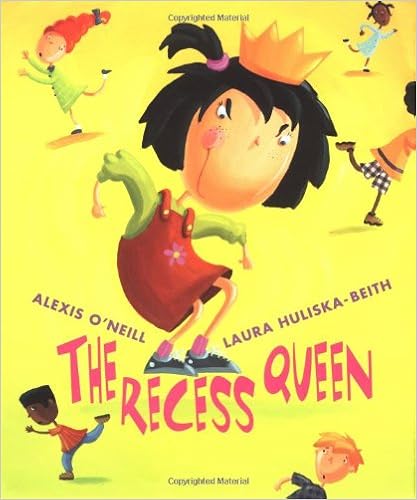
The Recess Queen

1st Grade
Clark the Shark
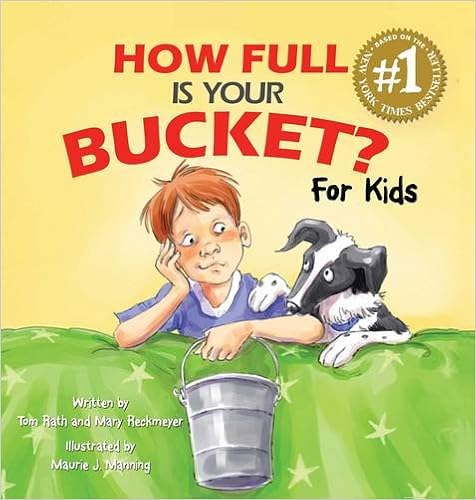
How Full is Your Bucket?
A Bug and a Wish

2nd Grade

3rd Grade
But It's Not My Fault!
The Juice Box Bully
The Invisible Boy

4th Grade
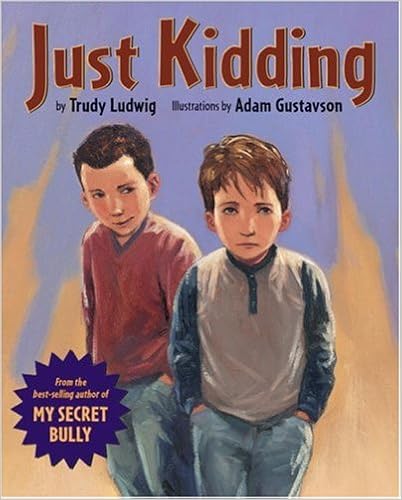
Just KiddingCoasting Casey
Simon's Hook


Interested in learning more about discussion questions or extension activities for a specific book? Email me or comment here. It may be a bit much to put here in a post but I'm happy to share everything I've got the rights to share.

Staying True to You Lesson Plan

Thursday, December 8, 2016

Last spring, my 4th graders became overly focused on being cool and some of my 3rd graders started doing really...well..stupid things...because others told them to. I wanted to do a lesson on peer pressure but needed something that was elementary appropriate and had nothing to do with substances. Something about staying true to yourself. And something that wasn't about accepting yourself for being different.

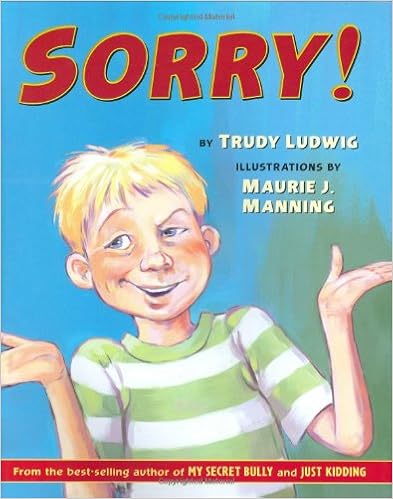
I found an unlikely winner in the book Sorry! by, of course, Trudy Ludwig. As I mentioned here, the book certainly does discuss genuine vs. disingenuous apologies, but the real focus is on staying true to who you are. The book is rich with discussion topics.


One activity I use after reading this book is Quiz, Quiz, Trade with discussion questions about the book and theme. I did this with my 3rd graders because it was a better fit with their abilities than the silent talk activity below.

                                           Sorry! Quiz, Quiz, Trade Discussion Question Cards

The other activity I use is what I call "silent talk" but others have called "chalk talk". I explain to the students that they are going to discuss the story...silently. Most are able to guess we'll be writing. I put 5-6 discussion questions on sticky chart paper and post them around the room. The idea is that after answering each question, they will continue to walk around the room and read each other's responses and add comments, ask questions, use symbols, etc. I project some ideas of ways that they can interact with one anothers' responses. I usually have to model this and remind them as we go, because they all get hyper focused with just answering all of the questions.


With about 10ish minutes left, I stop them, gather the question sheets, and we circle up on the floor. I go through each question and share what I notice about their responses and they share what they've noticed.

*In the past, I did this lesson after this sort of thing had already become an issue. This year, something similar started to pop up earlier than usual in one of the homerooms so I went ahead and moved this up in the curriculum map. It made the lesson more reinforcing (of their still strong beliefs in staying true to themselves and being kind) and preventative than in the past. I haven't decided yet if I think this is the right timing or if I should have waited. Time will tell!*


No Biggy! 1st Grade Lesson

Friday, October 21, 2016

This blog can be a little "big kid heavy" since I only service 2nd-4th, but my co-counselor does amazing work and I want to share some of her great ideas a swell. As part of the self-regulation theme she is using in 1st grade Life Skills lessons this year, she delivered a lesson using a book beloved by us both: No Biggy! This book is an awesome tool we've used in every grade as a way to teach some basic cognitive coping.

The lesson starts with a video clip showing a really young girl getting pretty frustrated over her blocks falling over:

This video leads to a short discussion on the girl's problem: Is it a big or small problem? Does her response match the size of the problem? Was it too small or too big?


Then my co-counselor read No Biggy!, asking:
  • What was Kiki’s problem?
  • What did her parents teach her?
  • What was Kiki able to do once she told herself “no biggy”?
There are two different activities she created to use to apply the lesson of the book. For each class, she selected the one she thought was the best match to the class's strengths and challenges.


Option A:

A piece of paper folded/divided in half.  On one side it says: "I might feel frustrated when…" and on the other side it says: "But, I know it’s NO BIGGY!" Students draw a picture of the problem and their solution on each respective side.
Option B: 

Create a powerpoint with images (muddy shoes, dropped food tray, etc.) and ask students to talk about what’s wrong in the picture.  Then with a partner or their table group, have them discuss solutions to these “no biggy!” problems


Powered by Blogger.
Back to Top